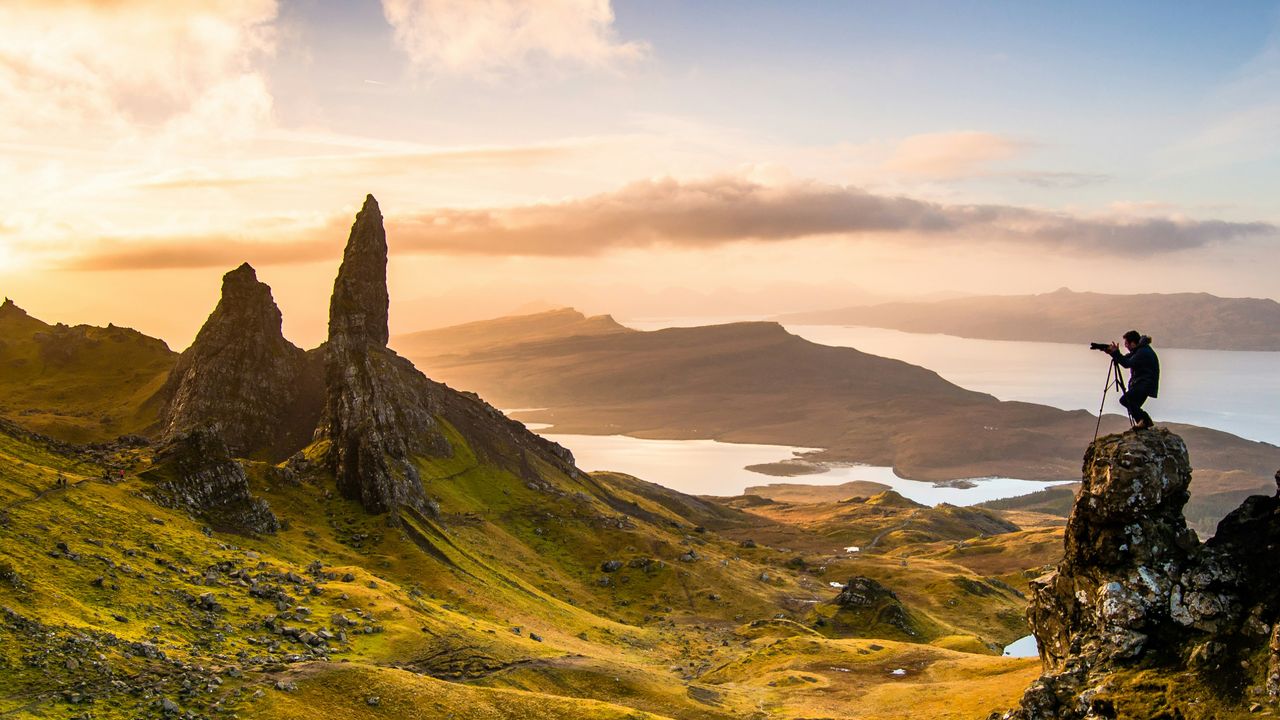
Golden hour photography uses the warm, soft light of the short window just before sunset and just after sunrise, when the sun sits less than about 6° above the horizon. [7] At mid-latitudes that window lasts roughly 35 to 60 minutes; near the equator it’s closer to half an hour, and near the Arctic Circle it can stretch past an hour. [3]
Whether that light turns out spectacular depends on the weather: scattered high clouds make it, a low gray cloud deck ruins it.
Every photographer knows the other outcome. You arrive at a carefully scouted spot, composition planned, and a thick layer of low cloud rolls in just as the sun nears the horizon, turning golden hour into flat, gray light. Knowing when golden hour happens is only half the job; knowing what the sky will do at that moment is the other half.
In this article:
Sonuby Weather shows not just when golden hour occurs, but the cloud, visibility and sunshine forecast for the same hours, so you can judge whether the light will be worth the trip.
Free to download and use. All forecasting features included.


Golden hour is usually defined as the time the sun spends between 6° above and 4° below the horizon, so the evening one runs a few minutes past sunset and the morning one starts a few minutes before sunrise. [7] This article counts the part in direct sun: in the evening from 6° down to sunset, in the morning from sunrise up to 6°. Because it is tied to the sun rather than the clock, the time changes every day and with every location.
How early it starts depends mostly on your latitude and the season. The further you are from the equator, the shallower the sun’s path and the longer it takes to sink those last 6°:
| Latitude | Example places | Evening golden hour starts before sunset (March/Sept · June · December) |
|---|---|---|
| 0° | Quito, Singapore | 27 · 30 · 30 minutes |
| 25° | Miami, Taipei | 30 · 33 · 34 minutes |
| 40° | New York, Madrid, Beijing | 36 · 41 · 43 minutes |
| 50° | Frankfurt, Vancouver, Prague | 43 · 52 · 58 minutes |
| 60° | Oslo, Anchorage, Helsinki | 55 · 80 · 129 minutes |
Minutes from the sun standing 6° high to official sunset, when its upper edge meets the horizon, for the northern hemisphere, calculated with NOAA’s solar position equations. [3] South of the equator, swap the June and December columns. Mountains or buildings on the horizon end golden hour earlier.
So for today, find your sunset time and count back by the minutes the table gives for your latitude and season. For exact times, a golden hour calculator or a forecast app does the arithmetic for your precise location.
Sonuby shows today’s sunrise and sunset times for every saved location. The sun chart in each location’s Daily Overview marks golden hour in orange and blue hour in purple on the sun’s path. Tap any point to see the light phase, the sun’s elevation and azimuth, and how long remains until sunset. The cloud chart sits directly below it, so you can check whether clouds will block today’s golden hour in the same view.
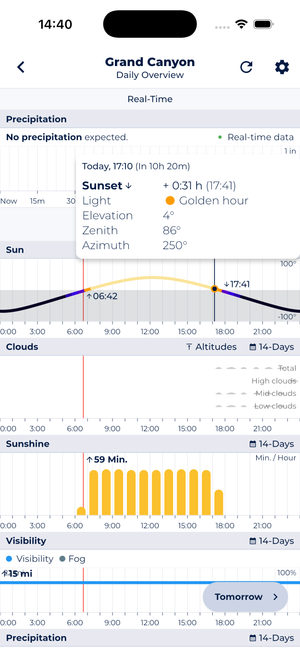
At the Grand Canyon, golden hour is under way at 17:10: the sun is 4° high at azimuth 250°, and sunset is 31 minutes away.
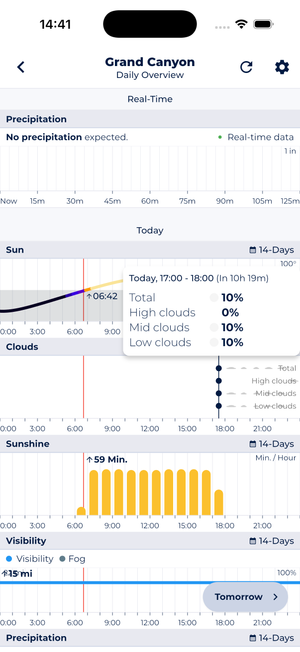
The cloud chart under the sun chart shows whether low cloud will block today’s golden hour, or high cloud will catch its color.
Golden hour is the time shortly after sunrise and before sunset when sunlight turns warm, soft and directional, the light photographers value most. It is also called magic hour, especially by photographers and cinematographers. [1]
Golden hour occurs twice daily, after sunrise and before sunset. During golden hour, the sun sits low, less than about 6° above the horizon, the convention this article uses. Despite the name, it rarely lasts a full hour: in Los Angeles, the sun is still 10–12° high an hour before sunset. [1] This low angle causes sunlight to travel through more atmosphere, scattering shorter blue wavelengths and allowing warm oranges, reds, and yellows to dominate. The light becomes soft, directional, and flattering.
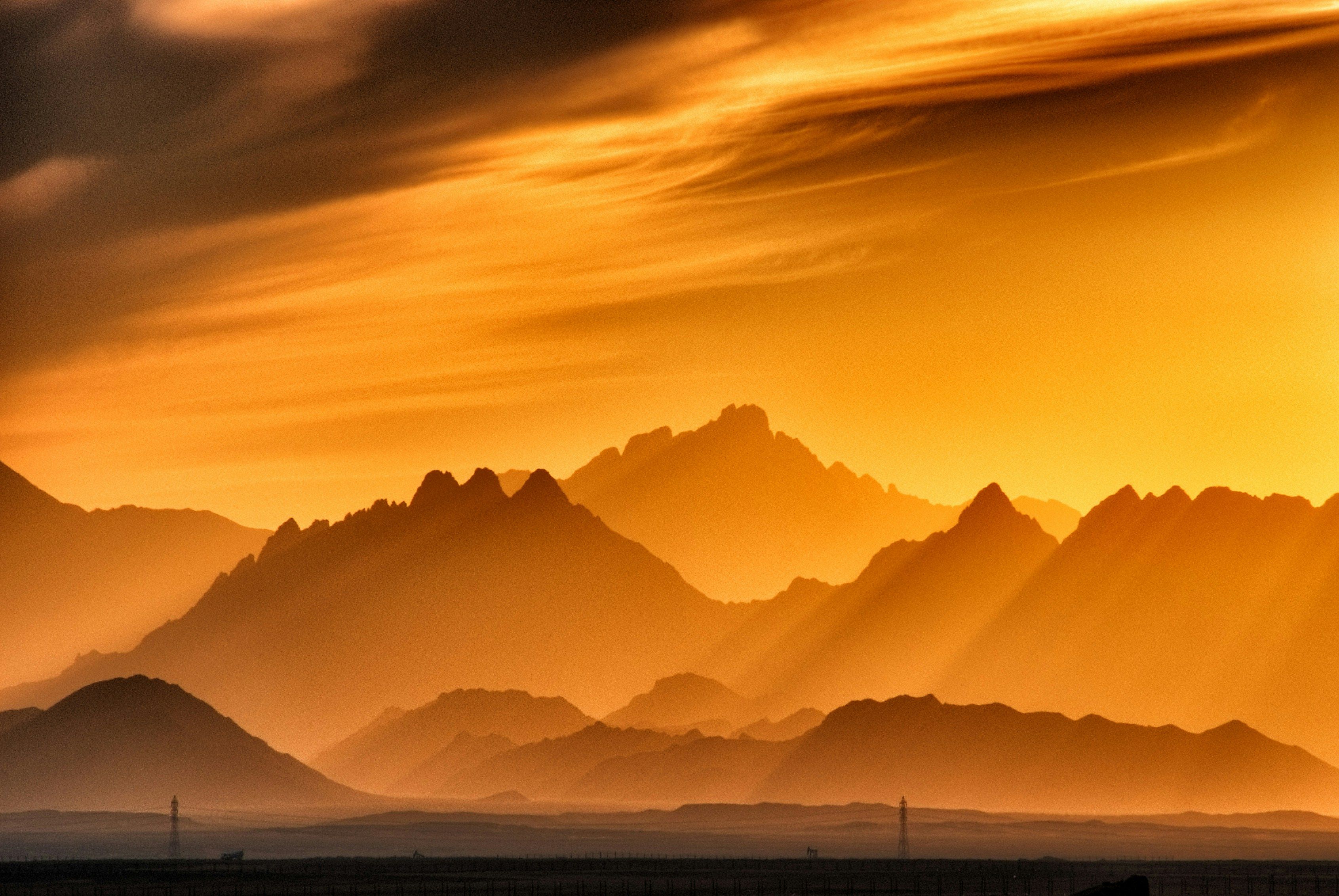
The warm orange glow happens because sunlight travels through much more atmosphere near the horizon, scattering away cooler blue tones. Photo by Sergey Pesterev
Blue hour happens when the sun is between 4° and 8° below the horizon, occurring just before sunrise and just after sunset. [2] While no direct sunlight reaches the subject, indirect light scattered by the atmosphere creates a cool, even blue tone. This ethereal quality makes blue hour perfect for cityscapes, twilight portraits, and long exposures.
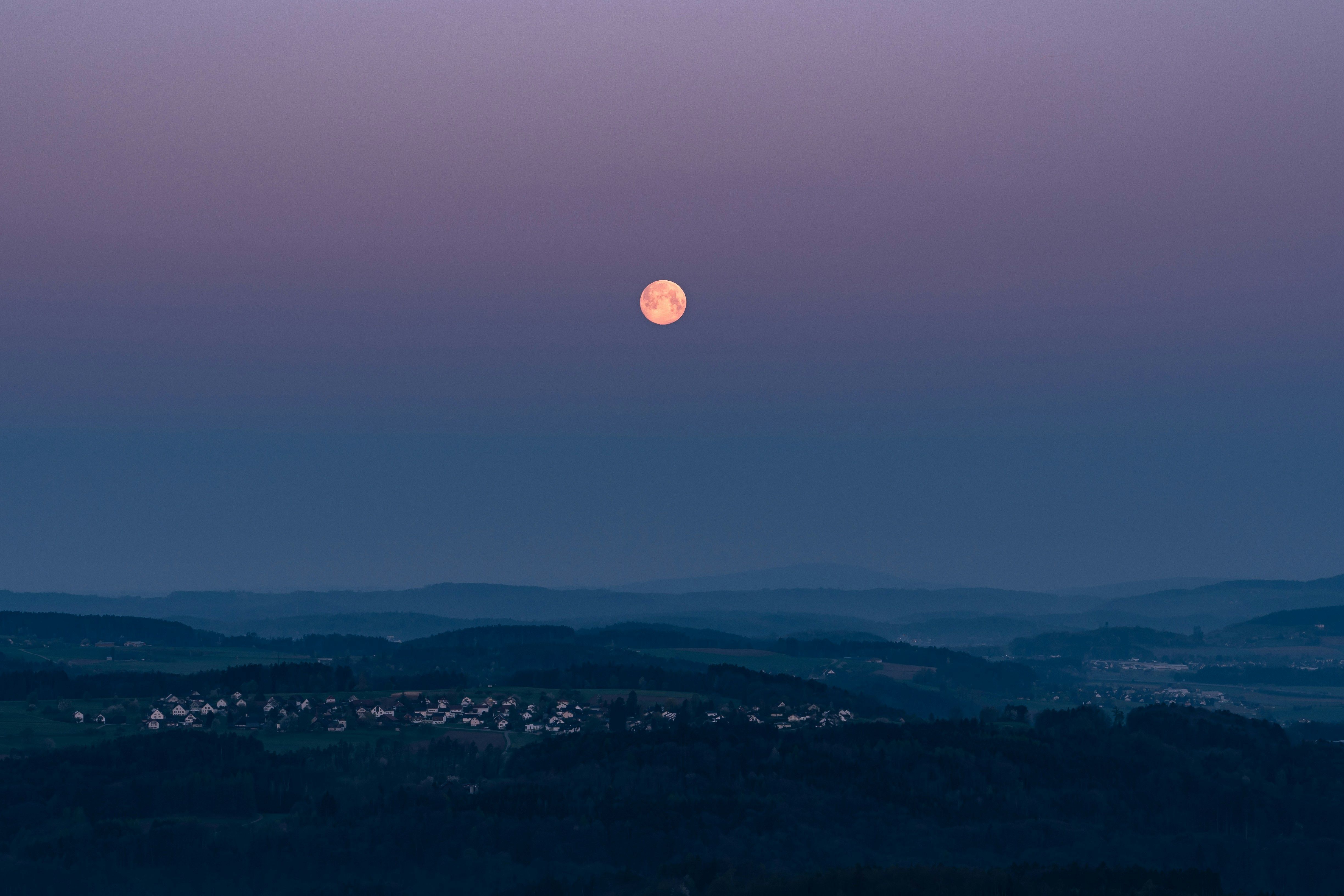
Blue hour’s soft, even lighting comes from indirect skylight after the sun drops below the horizon. Photo by Pascal Debrunner
Photographers treasure golden hour for several reasons. The warm color temperature during golden hour, around 3,500K, [1] creates emotional, inviting images impossible to replicate with midday light. Long shadows add depth and dimension to compositions. The sun’s low angle provides natural side lighting and backlighting opportunities. And perhaps most importantly, the dynamic range during golden hour is manageable—unlike harsh midday sun, your camera can capture detail in both highlights and shadows.
Understanding why golden hour looks the way it does helps you predict and maximize photographic opportunities. The quality of golden hour light results from sunlight’s journey through Earth’s atmosphere at extreme angles.
When the sun sits on the horizon, its light travels through about 38 times more atmosphere than when it’s directly overhead, the longest possible path through Earth’s atmosphere before sunset. [5]
When the sun sits near the horizon, this extended path causes Rayleigh scattering—the phenomenon that makes the sky blue during the day. Shorter wavelengths (blue and violet) scatter more easily than longer wavelengths (red and orange). During golden hour, shorter wavelengths scatter away before reaching your camera, leaving warm tones to illuminate your scene.
But golden hour isn’t just about sun angle. Weather conditions dramatically affect light quality, which is why two golden hours can look completely different. Atmospheric particulates—water droplets, aerosols, dust, and pollution—act as additional scattering agents. Light humidity or distant haze can enhance colors, creating those vibrant sunset photographs. Too much, however, and you get flat, murky light.
Haze can build up on clear, calm evenings, when a temperature inversion, a layer of warm air over cooler air near the ground, stops the air mixing and holds the haze close to the surface. [9] After rainstorms, cleaner air produces sharper, more saturated colors as reduced particulates allow more direct light to reach your sensor.
The color temperature falls as the sun sinks. Midday light measures around 5,500K; during golden hour it is around 3,500K, and just before sunset it drops to around 2,000K, painting everything in rich golds and oranges. [1] After sunset, during blue hour, the light turns cool again as blue skylight takes over.
This scientific understanding reveals an important truth: predicting golden hour quality requires weather forecasting. Knowing when the sun sets isn’t enough. You need to know cloud cover, visibility, humidity, and atmospheric conditions.
Golden hour is calculated from the sun’s elevation: a calculator finds the moments when the sun stands 6° above the horizon and when it reaches the horizon, and everything between is golden hour. Three inputs decide those moments: the date, your latitude, and your longitude.
Solving that formula for an elevation of 6° and of 0° gives the start and end of golden hour. Real calculators, such as NOAA’s Solar Calculator, add two corrections: atmospheric refraction, which lifts the sun’s image by about half a degree near the horizon, and the size of the sun’s disc, since sunset is counted when its upper edge disappears. [3][4]
A quick rule of thumb falls out of the geometry. Around the equinoxes, the sun sinks near the horizon at about 15° × cos(latitude) per hour, and from 6° high to official sunset it has nearly 7° to fall, since sunset is counted about 0.8° below the horizon. At the equator that’s 15° an hour, so it takes about 27 minutes; at 40° north it’s about 11.5° an hour, or 36 minutes; at 60° north it’s 7.5° an hour, or 55 minutes.
What a calculator can’t know is your horizon. A ridge or a row of buildings to the west ends golden hour before the calculated sunset, while shooting from a summit lets you see the sun longer. And a calculator only tells you when the light could be golden, not whether clouds will let it through. That’s why Sonuby works as the golden hour calculator you carry: it computes golden hour and blue hour for every saved location for the next 14 days, and shows them next to the cloud, visibility and sunshine forecast for the same hours.
Precise timing separates spectacular golden hour photographs from missed opportunities. Plain golden hour calculators cover the first two steps below; the rest need a cloud forecast, which is where Sonuby comes in.
Step 1 matters more than it looks, because the times move a long way through the year. In New York, evening golden hour runs from about 7:50 to 8:30 PM in late June, but from about 3:50 to 4:30 PM in December. [4]
Not all golden hours are created equal. Weather conditions determine whether you’ll capture spectacular photographs or flat, uninspiring images. Understanding these impacts helps you choose when to shoot and when to wait for better conditions.
Cloud cover is the single most important weather factor for golden hour photography, but the relationship is nuanced. Zero clouds can produce disappointing golden hours. The sun simply drops below the horizon with minimal color. Scattered or broken clouds, rather than a clear sky or a solid overcast, give you the best chance of a colorful sunset. Clouds act as canvases for sunlight, reflecting and diffusing warm tones across the sky.
The type of clouds matters enormously. High cirrus clouds, which form roughly 16,500 to 45,000 feet (5 to 14 km) up at mid-latitudes, are golden hour’s best friend. [8] Because they sit so high, these wispy ice crystal clouds keep catching sunlight after the sun has set where you stand, glowing red and orange. They add texture and interest without blocking light.
Mid-level altocumulus clouds can create dramatic patterns, especially when scattered. These are the classic “cotton ball” clouds that turn brilliant orange and pink during golden hour.
Low-level stratus clouds, however, typically ruin golden hour. These thick, gray cloud decks block sunlight completely, producing flat, colorless conditions. A solid overcast sky means no golden hour light.
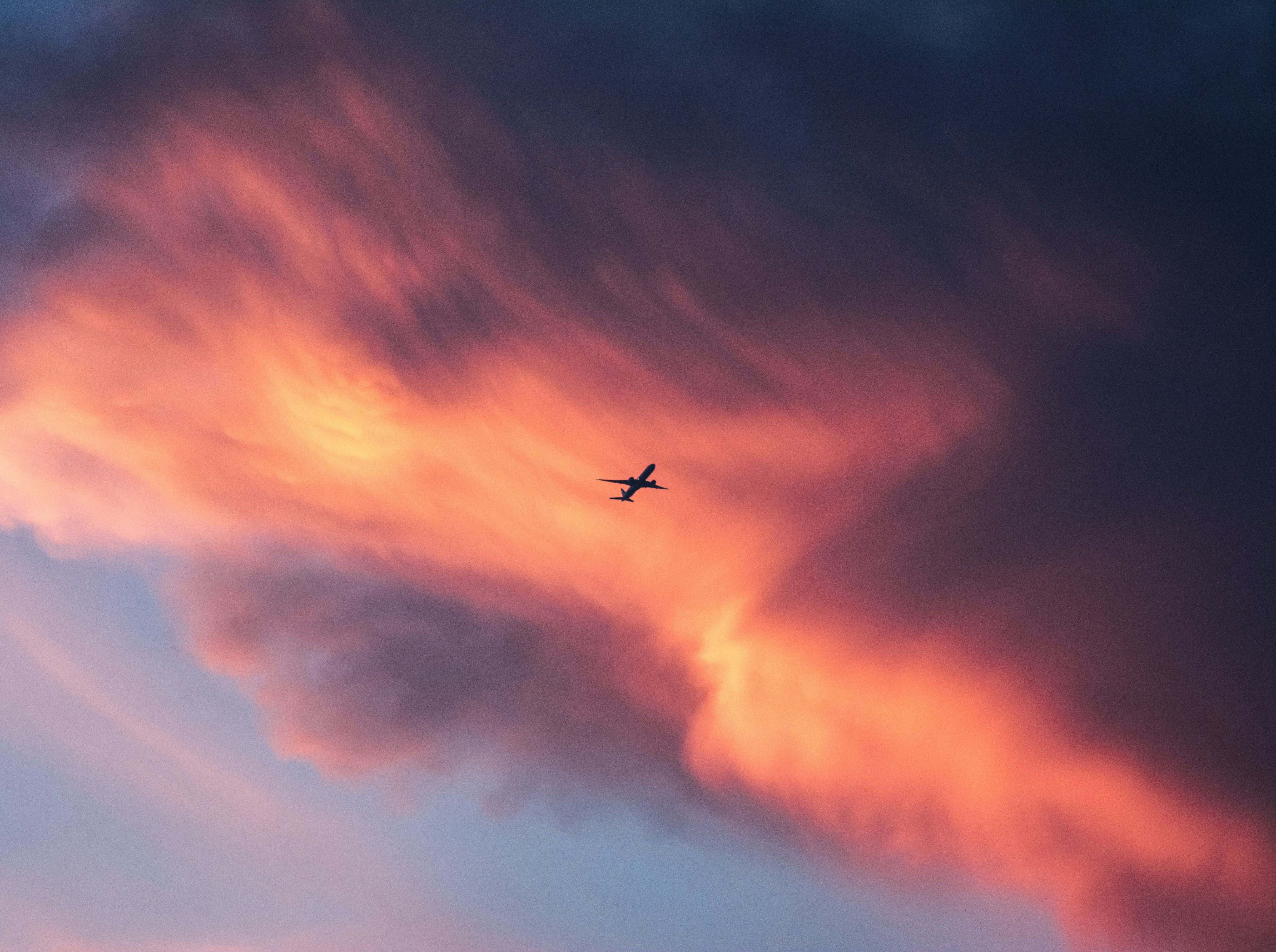
Scattered clouds like these catch and reflect golden light without blocking it—creating vibrant color across the sky. Photo by Andrew Wulf
Visibility and atmospheric clarity determine color saturation and contrast. Meteorologists measure visibility as the distance at which objects become indistinct. For photographers, the higher the forecast visibility, the sharper and more saturated golden hour colors look on distant subjects. Once it drops to a few miles, haze flattens distant mountains and skylines.
Interestingly, slightly reduced visibility can enhance certain golden hour conditions. A thin layer of humidity or distant smoke can intensify warm tones, creating those deep, saturated sunsets. The key word is “thin”—too much becomes problematic.
Post-storm conditions offer some of the most spectacular golden hour photography. After rain systems pass through, the atmosphere is cleaner with fewer particulates. Remaining clouds create dramatic formations, and the contrast between clearing skies and lingering clouds produces dynamic compositions. If you can position yourself so the storm is moving away from your sunset direction, you might capture clearing skies illuminating rain shafts—a photographer’s dream scenario.
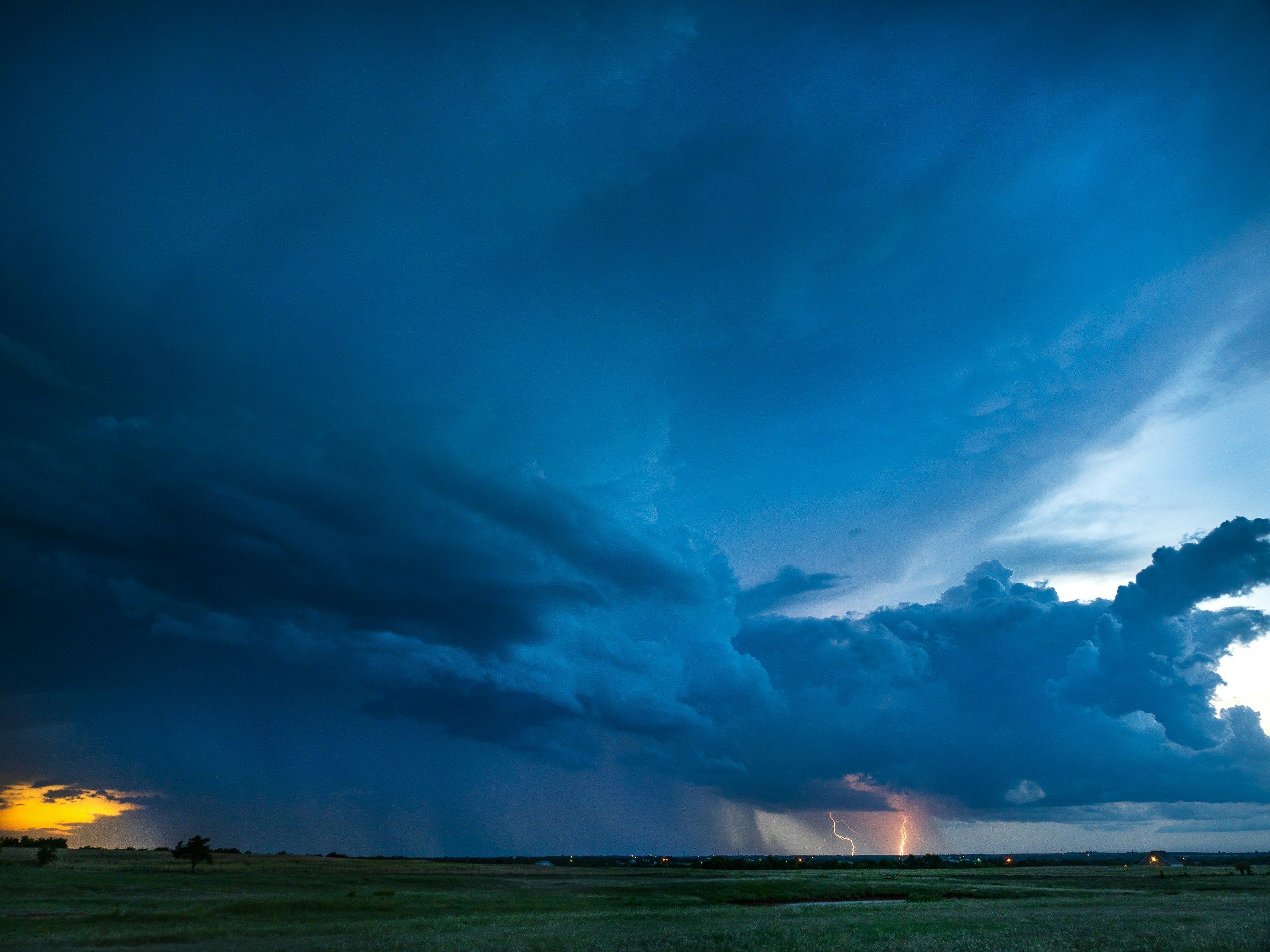
After storms pass, cleaner air and dramatic cloud formations create ideal conditions for spectacular golden hour photography. Photo by Raychel Sanner
Humidity affects color in subtle ways. Very humid air tends to carry haze and mist that soften and desaturate the light, especially over distance. Very dry air, common in deserts, gives sharp images with saturated colors but less of the soft atmospheric glow that makes golden hour special.
The practical implication is clear: successful golden hour photography requires weather forecasting. You need to know not just when golden hour occurs, but what the cloud cover percentage will be, cloud types, visibility levels, and whether conditions will create spectacular or mediocre light.
Choosing the right location for golden hour photography involves more than just finding scenic views. The sun’s position, geographic features, and weather patterns all interact to create or destroy photographic opportunities.
During golden hour, you need to know the sun’s azimuth (compass direction) and elevation to plan compositions effectively. For example, if you’re photographing a mountain landscape and want the peaks illuminated by golden light, you need the sun positioned so its light strikes the mountains directly. This requires knowing not just sunset time, but where the sun will be in the sky throughout golden hour.
Azimuth varies significantly throughout the year. In summer at mid-northern latitudes, the sun may set at azimuth 300° (west-northwest), while in winter it might set at 240° (west-southwest). This 60° shift means locations that work beautifully in summer might not work at all in winter, and vice versa. Planning tools that show sun paths help identify which locations will have optimal lighting on specific dates.
Elevation matters too. From a summit the horizon lies below eye level, the horizon dip, so you see the sun for a little longer than from the valley below, and golden hour there ends later. [6] Conversely, valleys or locations with mountains to the west lose direct sunlight before official sunset, shortening golden hour.
Having a backup location strategy is essential for golden hour photography. Weather is unpredictable, and even good forecasts sometimes miss localized cloud formations. Successful photographers scout multiple locations facing different directions. If your primary west-facing sunset location develops cloud cover, you can pivot to an east-facing location where clouds might catch the last light beautifully.
Weather maps reveal opportunities that simple forecasts miss. Cloud cover isn’t uniform—it varies by location. A weather map might show your home location under 80% cloud cover but a spot 20 miles away under 40% clouds. This is especially true near coastlines, mountains, or large water bodies where geography influences local weather. Having detailed cloud cover maps helps you find clear skies when your immediate area is cloudy.
For urban photography, sun position planning becomes even more critical. Photographing a specific building or street illuminated by golden hour light requires precise knowledge of sun azimuth. Many urban photographers use sun position apps to identify exactly which days and times the sun aligns with their desired composition.
Put sun position, elevation, azimuth and the weather forecast together, and instead of hoping for good conditions, you can go looking for them.
Golden hour photography requires different techniques than shooting in other lighting conditions. Understanding exposure, white balance, and compositional approaches helps you capture the stunning light quality that makes this time so special.
Exposure considerations: Golden hour’s lower light levels mean you’ll typically shoot between ISO 200-800, wider apertures like f/2.8-5.6, and shutter speeds of 1/125-1/500 second for handheld work. These are starting points that will vary based on your specific conditions, subject, and creative goals. The constantly changing light means you need to check exposure frequently. What worked perfectly five minutes ago may be a stop underexposed now.
Many photographers underexpose golden hour images by a third to half a stop, preserving highlight detail in bright skies while keeping rich, saturated colors. Modern cameras’ dynamic range allows recovering shadow detail in post-processing, but blown highlights are unrecoverable.
Bracketing becomes especially valuable during golden hour. The dynamic range between bright skies and shadowed foregrounds often exceeds even modern sensors. Taking three or five bracketed exposures allows HDR merging or selective blending in post-processing. Most cameras offer automatic exposure bracketing—a feature worth using during golden hour’s brief window.
White balance choices: Auto white balance often tries to neutralize golden hour’s warm tones, defeating the purpose. Setting white balance to “Daylight” or “Sunny” (typically 5,200-5,500K) preserves the warm color cast that makes golden hour special. Some photographers even set a slightly higher Kelvin value than Daylight to warm golden tones further.
During blue hour, the opposite applies. Setting white balance to “Cloudy” (6,000-6,500K) or even “Shade” (7,000-8,000K) counteracts excessive blue casts, creating more neutral tones while preserving the ethereal blue hour quality.
Golden hour offers warm, directional light perfect for:
Blue hour’s cool, even light excels at:
Compositional considerations: Golden hour’s long shadows become compositional elements themselves. Position yourself so shadows lead toward subjects, create patterns, or add depth. The low sun angle creates opportunities for dramatic silhouettes—position subjects between your camera and the sun, expose for the bright sky, and let subjects go dark for striking contrast.
During blue hour, the even lighting allows compositions that would be impossible during day or golden hour. City lights at the same brightness as the sky create balance between natural and artificial light sources. Water reflects blue hour’s colors beautifully, making lakes, rivers, and oceans valuable compositional elements.
Timing your shutter within golden hour matters. The first 20 minutes of golden hour often provides the best light quality for subjects—warm but not overly orange, with enough light level for handheld shooting. The last 10 minutes produce the most dramatic skies but may be too dark for non-sky subjects. Plan your shooting sequence accordingly.
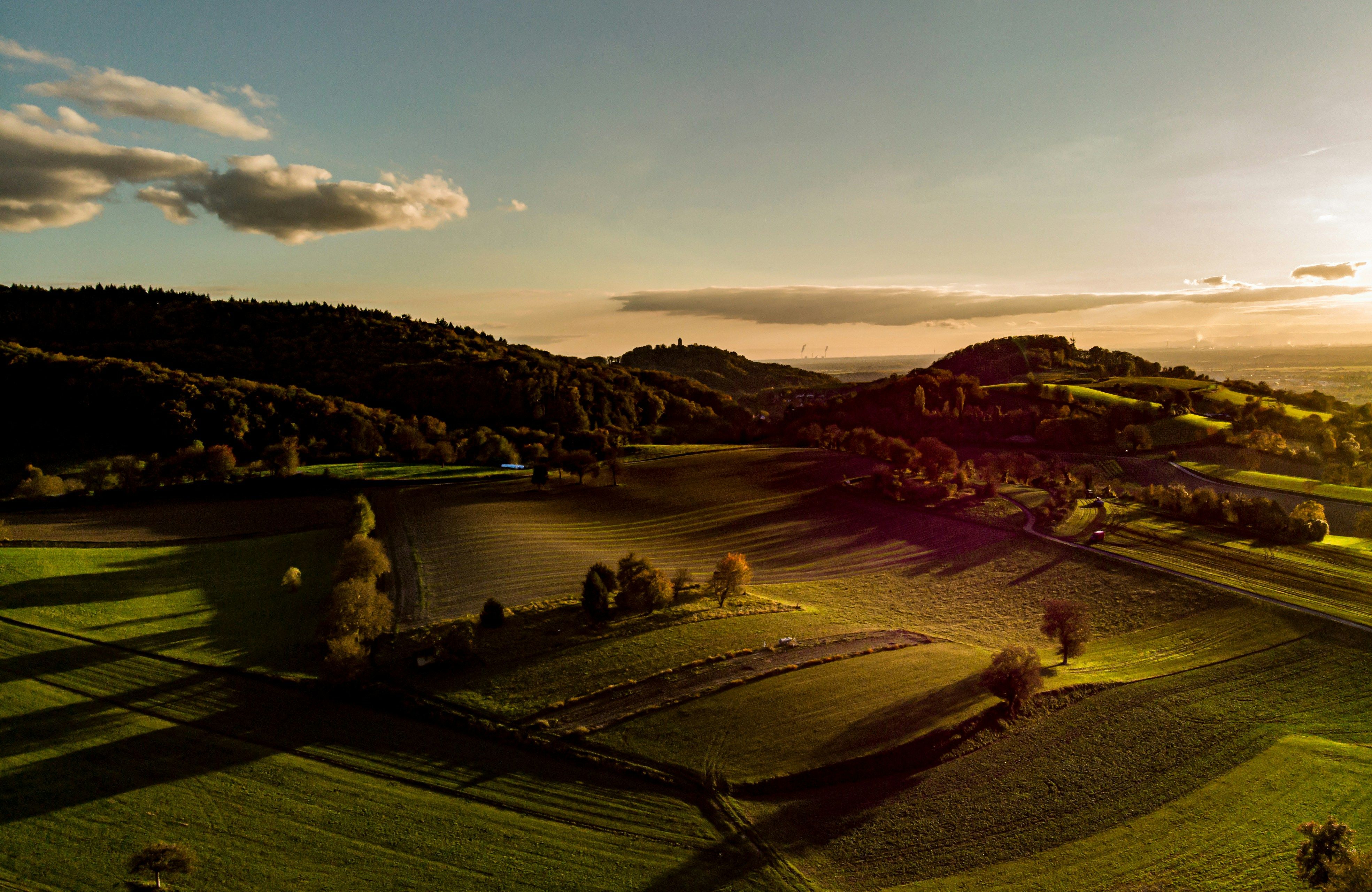
The low sun angle creates long shadows that add depth and texture to landscape compositions. Photo by Bernd Dittrich
With so many variables affecting golden hour photography success—sun timing, azimuth, elevation, cloud cover, visibility, and weather patterns—planning can feel overwhelming. Sonuby Weather puts them in one place.
Most weather apps tell you when the sun sets. That’s helpful but insufficient. The question isn’t just “when does the sun set?” but “will conditions create spectacular light?” Sonuby Weather’s Photography Report answers both.
You don’t need to be a meteorologist to use it. Sonuby shows the weather data as simple percentages, charts and color-coded maps.
14-day sun position forecasts, the sun chart shown near the top of this article, show precise timing for golden hour and blue hour up to two weeks in advance. They also include sun elevation and azimuth for any time of day. Planning a landscape shoot next weekend? You can see exactly where the sun will be in the sky at 7:15 PM, and choose a spot where its light falls on your subject from the side you want.
Cloud cover predictions give numbers instead of vague “partly cloudy” descriptions: 30% clouds at sunset, 60% clouds an hour later. This helps predict whether you’ll have the scattered clouds that create dramatic color or the clear skies that might disappoint.
Cloud cover forecasts also break down by altitude, so you can see whether the cloud sits high, where it catches golden hour color, or low, where it can block the sun.
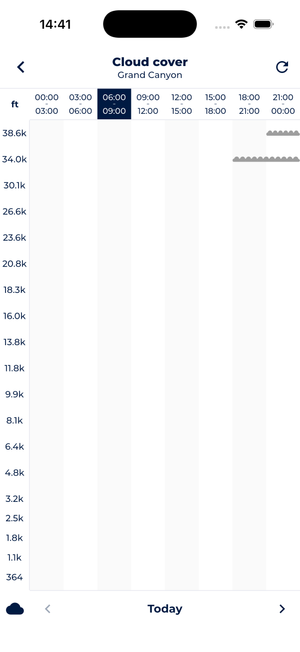
For a colorful sunset, look for scattered high or mid-level cloud to catch the light and a clear low layer toward the sun.
Interactive weather maps show how conditions vary across a region. Your home location might show 80% cloud cover, while Sonuby’s maps for cloud cover, sunshine, and visibility show a spot 15 miles away with 40% clouds and good visibility.
Visibility forecasts help predict atmospheric clarity. Planning a golden hour shoot of distant mountains? Visibility forecasts tell you whether haze will soften your images or if conditions will be sharp and clear. This is especially valuable in areas prone to humidity, pollution, or seasonal haze.
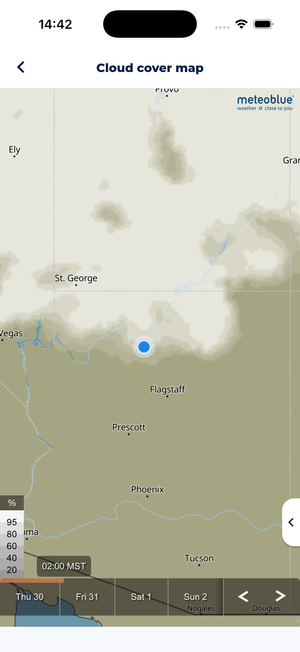
Use interactive weather maps to discover nearby locations with better cloud conditions when your primary spot has unfavorable coverage.
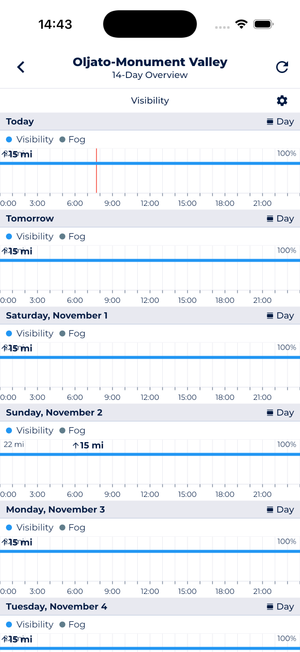
Monitor atmospheric clarity with visibility forecasts that predict whether you’ll capture sharp, saturated colors or hazy, soft images during golden hour.
Location comparison helps once you’ve scouted multiple potential shooting locations. Save your favorite spots—perhaps a mountain overlook, a beach location, and an urban skyline—then compare forecasts across all of them. When one location develops poor conditions, you have alternatives ready with detailed forecasts for each.
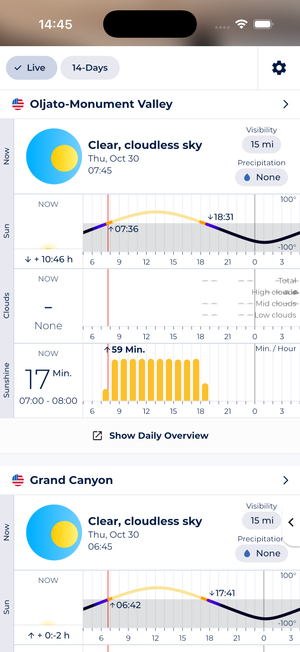
Compare conditions across saved locations to find the best golden hour opportunities when your primary shooting spot has unfavorable weather.
Sonuby’s customization features matter for photographers. Not everyone cares about precipitation during golden hour, but visibility, cloud cover, and sun position are critical. You can configure your forecast to prioritize the variables that affect your photography, hiding less relevant information.
For photographers who track multiple locations—perhaps regular shooting spots or planned travel destinations—Sonuby’s location collections organize everything. Create a “Golden Hour Spots” collection, add all your scouted locations, and check forecasts across all of them before deciding where to shoot.
Wedding photographers shooting golden hour portraits care more about consistent light than dramatic skies. Landscape photographers chase the dramatic clouds and colors. You can set up Sonuby’s forecasts to show the variables each of them needs.
The app is available globally on both iOS and Android. All weather forecasting features are included in the free version—premium upgrade available for ad-free experience and advanced forecast customization.
Golden hour is the stretch when the sun is less than about 6° above the horizon: roughly half an hour near the equator, 35 to 60 minutes at mid-latitudes, and longer toward the poles. Its times follow from the date, your latitude and your longitude, so a calculator can tell you when it starts. Whether the light turns golden is down to the sky, and that takes a forecast: scattered high and mid-level cloud, a clear gap low toward the sun, and good visibility. Look up the times, check the cloud forecast by altitude a few days out, keep a backup spot, and recheck on the day.
Golden hour is the short window just after sunrise and just before sunset when the sun is less than about 6° above the horizon. Sunlight passes through so much atmosphere that it turns warm, soft and directional, which flatters faces and landscapes. It lasts about half an hour near the equator, 35 to 60 minutes at mid-latitudes, and longer near the poles.
Not quite. An hour before sunset the sun is still around 10–12° high at mid-latitudes such as Los Angeles, so the light is pleasant but not yet golden. The warm golden light usually begins 35 to 60 minutes before sunset at mid-latitudes, depending on latitude and season, and about half an hour before sunset near the equator.
Only when sunset falls a little after 7 pm, because golden hour follows the sun, not the clock. In much of the US that happens in spring and early autumn. In New York, evening golden hour starts at about 7:50 pm in late June, and in December it's over by about 4:30 pm.
Find the times when the sun is 6° above the horizon and when it sets, using your date, latitude and longitude in the standard solar position equations, such as those behind NOAA's Solar Calculator. As a rule of thumb around the equinoxes, the sun sinks about 15° × cos(latitude) per hour near the horizon, and it has nearly 7° to fall from 6° high to sunset: about 27 minutes at the equator, 36 minutes at 40° and 55 minutes at 60°. A golden hour calculator or forecast app does this for you.
Golden hour lasts about half an hour near the equator and 35 to 60 minutes at mid-latitudes like the US and Europe, longest in winter. Near 60° north it stretches past an hour in summer and to about two hours in December.
It's good light, but not golden hour yet. Two hours before sunset the sun still stands about 12° to 22° high between 40° and 50° north, depending on the season [3], so the light is softer than at midday but still fairly neutral. Use that time to scout and set up, and save your key shots for golden hour itself, the last 35 to 60 minutes before sunset at those latitudes.
Start around ISO 100–400 on a tripod or ISO 200–800 handheld, and raise it as the light fades. Raise ISO rather than letting your shutter speed drop below about 1/125 second handheld, and expect ISO 800–3200 once the sun has set and blue hour begins.
Usually none: magic hour is another name for golden hour, used especially by photographers and cinematographers. Golden hour is the warm light while the sun is just above the horizon; blue hour, which follows sunset, is the cool, even light when the sun is 4–8° below it.
Scattered or broken clouds create the best golden hour conditions. High cirrus and mid-level altocumulus clouds catch the low sunlight and glow orange and pink, even after sunset. Avoid a low deck of stratus cloud near the horizon, which blocks the sun entirely.
Yes. Sonuby Weather shows golden hour and blue hour on a sun chart for every saved location, 14 days ahead, with the sun's elevation and azimuth, right next to cloud cover by altitude, visibility and sunshine forecasts. That tells you not just when golden hour occurs, but whether the sky will let the light through. Learn more about Sonuby's photography features.
Resources:
[1] Golden hour (photography), Wikipedia
[3] NOAA Solar Calculator: calculation details
[5] Air mass (astronomy), Wikipedia
[7] The Golden Hour: Sunrise, Sunset and Photography, Sunrise-Sunset.org
